Blog

Picture Sarah, a Manager at a global consulting firm grappling with the challenges of structuring organisational knowledge. Every day, she faces the challenge of making vast amounts of project documentation, research papers, and client insights accessible to 5,000+ consultants across 20 countries. Her team's hierarchy-based knowledge bases, while organised, often leave consultants frustrated when they need to quickly find specific case studies or market analyses for client pitches.
Savvy professionals like Sarah increasingly recognise that effective knowledge organisation hinges not just on storing information, but on making it instantly discoverable and actionable. While their organisations invest millions in creating intellectual property through client projects and research, the real challenge lies in ensuring this knowledge can be quickly surfaced when needed. A junior consultant in Singapore shouldn't have to spend hours navigating traditional knowledge base taxonomy to find relevant healthcare market entry cases when preparing for a client meeting.
The relationship between hierarchical vs search-driven models and value creation has evolved dramatically. While traditional folder-based systems remain important, the emergence of AI-powered knowledge base search has transformed how professionals interact with knowledge repositories. Sarah's team found that consultants were missing crucial insights simply because they were buried in logical but unintuitive folder structures - for instance, a retail innovation case study filed under "Consumer Products" when someone was searching under "Digital Transformation."
Future trends in knowledge management reflect broader changes in how organisations leverage their intellectual capital. In the past, value came from having well-structured hierarchical systems. Today's business environment rewards those who can leverage search-centric knowledge base models to instantly surface relevant insights from across silos - whether it's finding similar past proposals to accelerate bid responses, or quickly assembling best practices from multiple industry verticals for a client presentation.
Traditional approaches to effective knowledge organisation emerged from our tendency to structure information hierarchically - much like how libraries organise books by subject areas and sub-categories. While this approach provides clear structure, Sarah's team found it breaking down when trying to organise cross-functional content. For example, where should they file a case study about digital transformation in healthcare retail clinics? Under healthcare, retail, or digital? The same content needed to be discoverable through multiple logical pathways.
The limitations of hierarchy-based knowledge bases become particularly apparent in time-sensitive situations. When a Partner needs specific reference cases for a client meeting in an hour, navigating through folder structures becomes a liability rather than an asset. Similarly, when new consultants join the firm, they struggle to build mental models of where different types of content might be stored, leading to reduced productivity and frustrated teams.
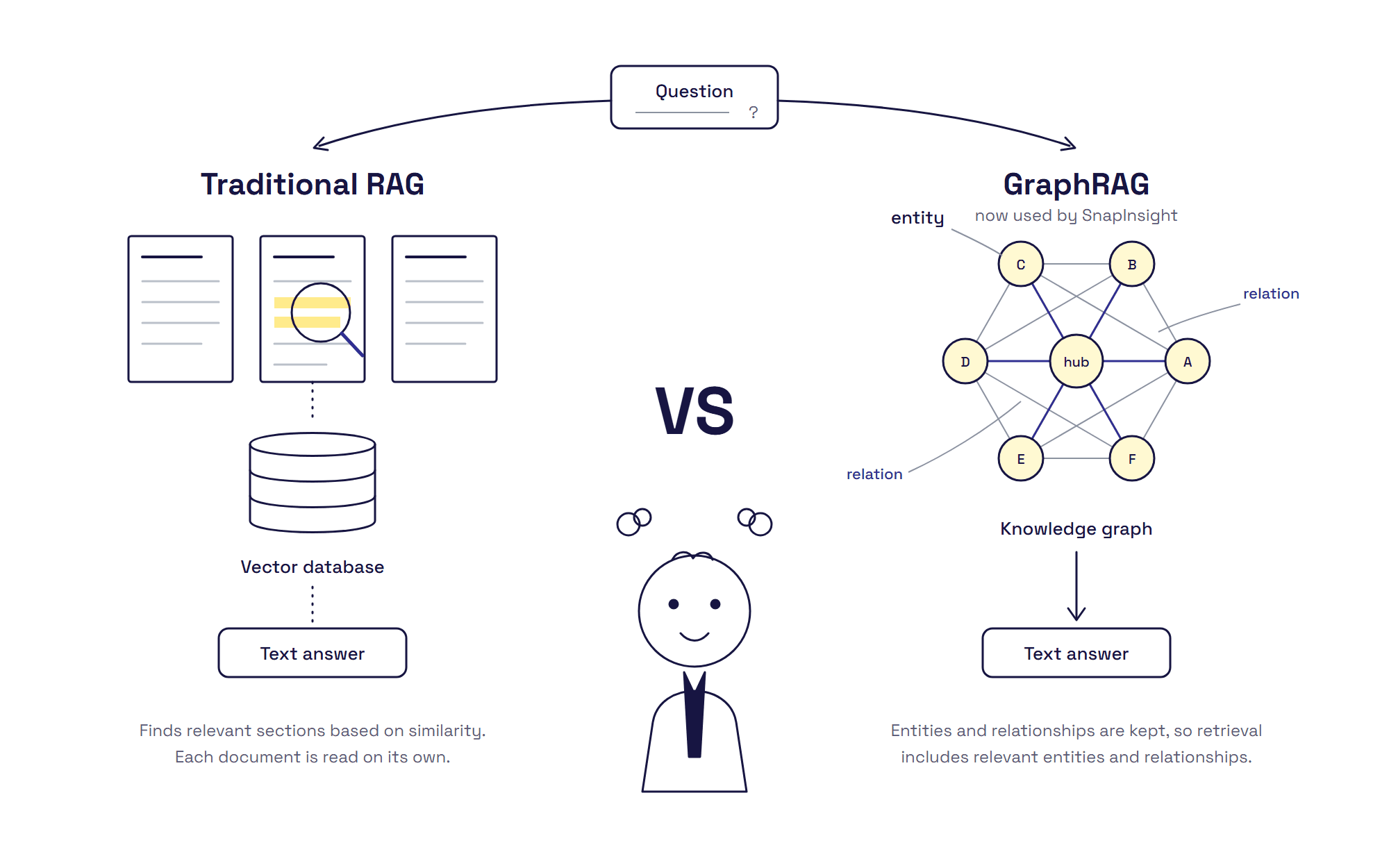
The solution lies in hybrid knowledge base design and balancing hierarchy and search functionality with modern AI capabilities such as SnapInsight. This creates systems that understand context and intent - so when someone searches for "healthcare digital transformation," they find relevant, context-specific content regardless of where it is located. It's like having a knowledgeable librarian who understands exactly what you're looking for and can pull insights from across the entire knowledge base instantly.
As organisations navigate increasing information complexity, success will come from making knowledge work for people, rather than making people work to find knowledge. Future trends in knowledge management show a clear shift from simply storing and organising content to ensuring it can be instantly surfaced when and where it's needed through AI-powered knowledge base search.
So, back to Sarah's team. How could they transform their approach to structuring organisational knowledge?
Their existing knowledge base taxonomy could be kept as a backbone, but layered with search-centric knowledge base models that understand context and intent. This means that when a query arises, they could find relevant data whether it's categorised in industry verticals, service lines, or geographic folders. The impact of balancing hierarchy and search functionality is immediate and measurable. Time spent searching for information drops while the reuse of existing intellectual property increases significantly. More importantly, the quality of client deliverables improves as teams can more easily build upon past work rather than starting from scratch. For instance, when preparing a digital transformation strategy for a regional healthcare provider, consultants can quickly surface relevant insights from similar projects across retail, banking, and insurance sectors, leading to more innovative, relevant and comprehensive recommendations.
Hybrid knowledge base design such as used by SnapInsight also helps break down knowledge silos between departments. HR teams can easily find relevant case studies for training materials, while business development teams can quickly assemble credential decks by pulling relevant project experiences across multiple dimensions - industry, service type, or technology platform. This cross-pollination of ideas and insights will be a key differentiator in winning new business.
Perhaps most significantly, effective knowledge organisation through AI-powered knowledge base search will shift organisational culture. Junior team members feel more empowered to contribute, knowing they could easily find precedent work to guide their efforts. Senior consultants spend less time answering basic questions about where to find information, and more time on high-value mentoring and strategy discussions.
The knowledge management system is evolving from a necessary repository to a strategic enabler of organisational learning and innovation, unlocking potential and driving successful outcomes. The difference between organisations that thrive and those that stagnate will increasingly lie in how effectively they harness this strategic asset.
Latest