Blog

Artificial intelligence is reshaping our world and never more so than in the case of how organisations manage and leverage knowledge. As businesses increasingly look to AI to streamline processes, enhance decision-making, and improve customer experiences, the need for an AI-ready knowledge base has never been greater. However, simply adopting AI isn’t enough. Success hinges on careful planning, the right infrastructure, and a clear understanding of how AI interacts with structured and unstructured knowledge.
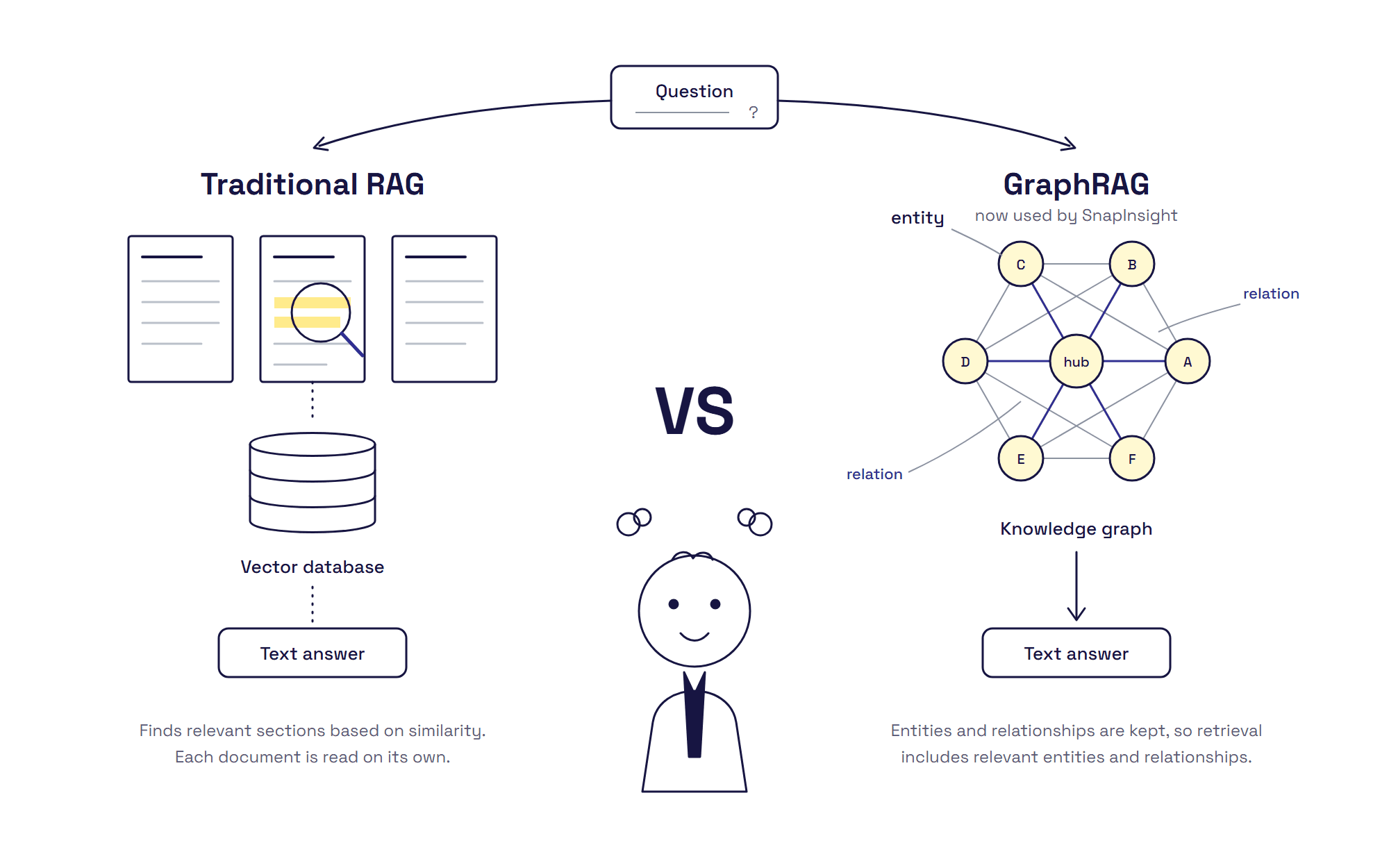
Building an AI-ready knowledge base starts with selecting the right tools and technologies. Organisations must evaluate AI solutions that align with their specific needs, whether it's natural language processing (NLP) for advanced search capabilities, machine learning models for predictive insights, or generative AI for automated content generation. The key is to opt for scalable solutions that can grow with the organisation's evolving demands. SnapInsight, for example, is leading the way in providing future-ready knowledge management solutions that seamlessly leverage AI capabilities. Businesses should look for AI tools that not only give the right answer, but also improve knowledge discoverability, automate routine tasks, and provide intelligent recommendations.
The transformation of knowledge bases with AI is not just about efficiency; it's about unlocking new possibilities. AI can detect patterns in data that humans might overlook, provide contextualised knowledge delivery, and enable personalised user experiences. By thoughtfully preparing their knowledge ecosystems, organisations can harness AI’s full potential and drive meaningful, lasting improvements. AI-driven insights can lead to smarter business strategies, enhanced customer engagement, and operational agility that sets businesses apart in a digital-first world.
Data preparation is the cornerstone of AI integration. AI models thrive on high-quality, well-structured data. This means organisations must invest time in cleaning, categorising, and standardising their knowledge assets. Redundant or outdated information can skew AI outputs, leading to inefficiencies rather than improvements. Implementing robust metadata tagging and knowledge classification frameworks ensures AI can retrieve, analyse, and generate insights with accuracy and relevance. Additionally, businesses should establish data governance policies that promote consistency and compliance, ensuring knowledge assets remain usable and accessible over time.
Beyond technology and data, the human element plays a critical role in making AI implementation successful. Training teams to work with AI tools is essential, as is fostering a culture that embraces continuous learning and adaptation. Employees must understand how AI fits into their workflows, how to interpret AI-driven insights, and how to refine AI outputs when necessary. Rather than replacing human expertise, AI should be seen as an augmentation tool that enhances productivity and innovation. Regular training sessions, AI literacy programs, and clear communication on AI's role within the organisation can help bridge the gap between technology and human intuition.
AI evolves rapidly, and today’s solutions must be designed with the flexibility to adapt to new developments. A rigid, static knowledge base will quickly become obsolete. Instead, organisations should prioritise cloud-based, modular architectures that allow for incremental updates and expansions. Future-ready knowledge bases must accommodate new AI capabilities as they emerge, ensuring businesses remain competitive in a landscape of constant technological advancement. Organisations should also evaluate AI performance regularly and iterate on their implementations to refine results and enhance effectiveness over time.
Information is a strategic asset, and having an AI-ready knowledge base is no longer optional - it’s a necessity. Businesses that invest in the right AI implementation strategies today will be best positioned to navigate the future with confidence. With a well-structured approach, the integration of AI into knowledge management can be a powerful catalyst for growth, innovation, and resilience. By focusing on the right tools, structured data management, team training, and scalable solutions, organisations can transform their knowledge bases into dynamic, AI-enhanced engines that drive competitive advantage and long-term success.
Latest